
A modern leather might look right in a sample. The colour might be spot on to the original. It may even be more durable and easier to clean than what the car had when it was new. But once it is fitted, it can change the whole character of the classic car interior.
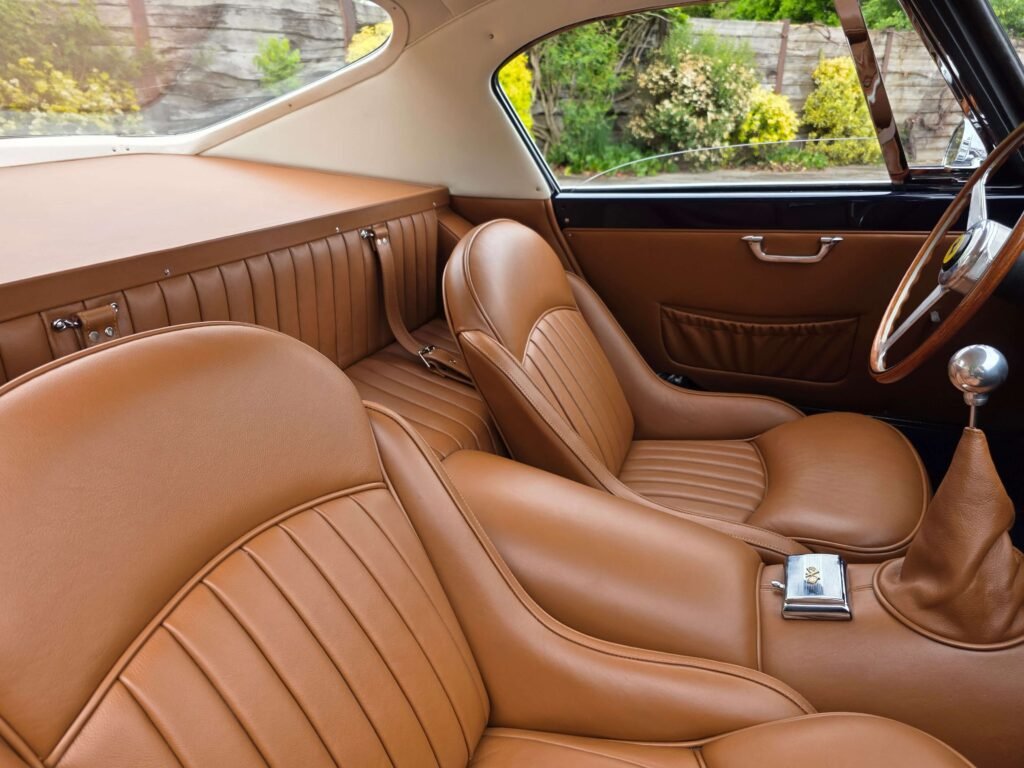
In this Ferrari, the leather chosen was good quality modern automotive leather, and the colour made sense on paper. But in the car, it looked wrong straight away.
The surface was too smooth, too flat and too uniform. It did not have the grain or depth you expect to see in that sort of classic car interior.
That is the mistake owners need to be aware of. Modern leather often gives a cleaner, flatter and more consistent appearance. That works well in many modern cars, but in a classic it can make the interior feel lifeless, uniform and out of place.
The seats and trim are what you see and, more importantly, touch every time you get in. Older interiors were never perfect. The hides had natural variation, and the trim was, and still is, made and fitted by hand. Those imperfections are not flaws. They are part of the character that makes many classic car interiors feel right.
Modern Automotive Leather for Classic Cars
Modern automotive leather is usually designed for durability, consistency and ease of cleaning.
It often has a sealed surface, commonly with a polyurethane coating or modern topcoat. This makes it easier to wipe clean, more stain-resistant and more consistent in colour across the hide. Modern processes also produce less waste, because there is less variation and fewer visible imperfections to work around.
Modern leather has to cope with daily use, cleaning products, sunlight, warranty expectations and large-scale manufacturing. It can be practical and hard-wearing.
But that practicality comes with a trade-off.
The sealed surface often means you are not really feeling the leather in the same way. You lose the feeling of the natural grain and movement of the hide.
This has an impact on the classic car interior, and it is often what separates a good restoration from a great one.
The Problem with Leather Sample Books in Classic Car Trimming
Leather sample books are vital, but they can be misleading.
Customers are often shown pages of small swatches covering a wide range of colours. The natural thing is to become fixated on picking the perfect one. That is understandable, but it is not enough.
A small sample does not show how the leather will look across a complete classic car seat.
It does not show how the grain changes over a larger panel. It does not show how the hide behaves when it is worked and fitted.
Swatches are often glued to the card, which makes the problem worse. You cannot properly get a feel for the leather.
The question should not just be:
“Does the colour match?”
The better question is:
“Is this the right type of leather for this car?”
What Owners Should Consider When Choosing Leather for a Classic Car
When choosing leather for a classic car interior, colour is only one part of the decision.
It is not about saying modern leather is bad. In the right car, it is exactly what you want. But in the wrong classic, it can make a well-trimmed interior look out of character.
Think about the age and character of the car. Look at the grain, finish and feel of the hide. Ask whether the leather suits the period of the car, not just whether it matches the original shade.
The best material is the one that respects the car.
A classic car interior should not just look smart.
It should feel right.